Tuesday, December 10, 2013

Bioethanol / Biodiesel


Biodiesel is an alternative or additive to standard diesel fuel that is made from biological ingredients instead of petroleum (or crude oil). Biodiesel is usually made from plant oils or animal fat through a series of chemical reactions. It is both non-toxic and renewable. Because biodiesel essentially comes from plants and animals, the sources can be replenished through farming and recycling. Biodiesel is safe and can be used in diesel engines with little or no modification needed. Although biodiesel can be used in its pure form, it is usually blended with standard diesel fuel.
Biofuel wont harm the air and our environment which essentially environmental science is all about. We need to help our community and our own health. Here is a link to show how you can make your own biodiesel.


Monday, November 4, 2013

Community Gardens


Community Gardens are meant to welcome everyone to the beautiful nature provided. The nature of the gardens allows nature to speak for itself and people come together to create something. These gardens help benefit children and families when interacting with one other. Community gardens provide fresh produce and plants as well as satisfying labor, neighborhood improvement, sense of community and connection to the environment. They are publicly functioning in terms of ownership, access, and management as well as typically owned in trust by local governments or not for profit associations.


 Community gardens improve users’ health through increased fresh vegetable consumption and providing a venue for exercise. The gardens also combat two forms of alienation that plague modern urban life, by bringing urban gardeners closer in touch with the source of their food, and by breaking down isolation by creating a social community.
Community gardens provide other social benefits, such as the sharing of food production knowledge with the wider community and safer living spaces. Active communities experience less crime and vandalism

“We live in a world that has practiced violence for generations—
violence to other creatures, violence to the planet, violence to ourselves. Yet in my garden, where I have nurtured a healthy soil-plant community, I see a model of a highly successful non-violent system where I participate in gentle biological diplomacy rather than war. The garden has more to teach us than
just how to grow food.”

--Eliot Coleman,


12 Soils of the World/Georgia & Rock

Interestingly there are 12 different types of soils in the world. Below is a map of the order of the soils and where they are located in the world. Here is a link for the informational website of the different soils. http://www.extension.org/pages/54963/the-twelve-soil-orders#.UngnJCRbwoY

soil orders


The soil type in Georgia and Macon is the ultisols, which is the redder clay because Georgia is known for its deep dark red clay.  Georgia clay is heavy, nutrient-rich and retains moisture during wet periods. During dry weather, it turns hard as a rock, making it difficult to work with. This heavy nature makes it hard for many plants to send down roots, while some simply rot due to lack of drainage. Gardeners combat this problem by adding organic matter and tilling it in deeply. Plants suitable for high clay content soils include daylilies, Chinese elm, cypress trees, willow trees and poplar trees.

But, not all Georgia soils are red, but many of them are. The State is well known for its abundance of "Georgia Red Clay".  People often ask why the soils are red. The red color that is so evident in Georgia soils is due primarily to iron oxides.
Soils form from the interaction of climate, organisms, parent materials, relief, and time. Red soils in Georgia result from the affect of a warm, humid climate weathering acid crystalline rocks on rolling hills over a long period of time.


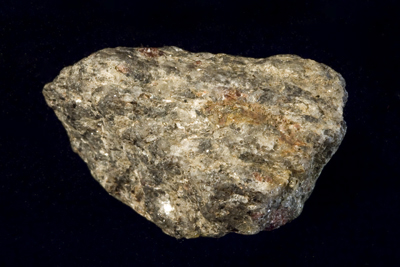
A specific rock, the Micaceous Shist is a metamorphic rock.  A schist is defined as “a metamorphic crystalline rock that has a closely foliated structure and can be split along approximately parallel planes.” In layman terms, this means it is made up of many layers and if this rock is struck it will break along a particular cleavage; thus the word schist.

 These layers under high heat and pressure were compressed and metamorphosed into a single solid rock.s derived from the Greek word meaning ‘to split’. The individual flakes of mica within the schist are visible to the naked eye. They are the reason for the rock’s sparkling and reflective surface. These bits of mica can also be easily flaked off the rock.


Sunday, November 3, 2013

River Lab


The importance of community parks have more than one actual significance. Parks are all about joining together and becoming a community so there is social life rather than individuals. People in the society are out enjoying the nature and environment rather than sitting inside. Mother nature to a human helps resolve unwanted stress and relieve pressured to the body/mind. The sense of community all matters when the people in a community join together in understanding to keep the park clean and reserved as long as possible.
The purple path is where we figured out the depth and length for the river lab.

Hyperlink: http://www.newtownmacon.com/projects/ocmulgee-heritage-trail/


Google Earth

The location of the picture is The Rocky Mountains.
Each line represents a certain elevation number,
Purple=5200ft
Light Blue=4000ft
Dark Blue=5300ft
Green=5000ft
Orange=4800ft

Mystery of MegaFlood

The mystery of the mega flood was found as a giant land of pot hole formations. There was thought from a theorists that the formations were brought upon from glaciation by an ice age. There was thought also that this was happening over a long period of time and a body of water was flowing off into the Pacific Ocean.
His theory was correct and had thrown a lot of people off guard. There was a dam that had flooded out and after a few hours reached the scab lands, it was like underwater tornado's that made holes and rocks explode. There now are huge rocks and boulders shown on the dry lands where this chaos had happened.

Tree Identification

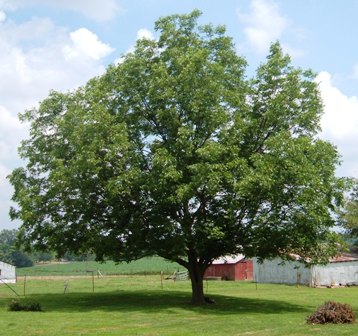
Today we walked through campus for Lab and were able to see multiple types of trees. This was a hot day for us in lab because we had to walk around campus. But I think this was a great way for our class to admire all the different types of trees.

Three types of trees that I liked were the Pecan, Holly and Weeping Willow


The Pecan:
The pecan tree is a large deciduous tree, growing to 20–40 m (66–130 ft) in height, rarely to 44 m (144 ft); taller trees to 50–55 m (160–180 ft) have been claimed but not verified.A pecan, like the fruit of all other members of the hickory genus, is not truly a nut, but is technically a drupe, a fruit with a single stone or pit, surrounded by a husk.


 The Holly:

Plants in this genus have simple, alternate glossy leaves, typically with a spiny toothed, or serrated leaf margin. The inconspicuous flower is greenish white, with four petals. They are generally dioecious, with male and female flowers on different plants, although there are exceptions. It is a genus of small, evergreen trees with smooth, glabrous, or pubescent branchlets. The plants are generally slow-growing with some species growing to 25 m (82 ft) tall.


 The Weeping Willow:
 Willows all have abundant watery bark sap, which is heavily charged with salicylic acid, soft, usually pliant, tough wood, slender branches, and large, fibrous, often stoloniferous roots. The roots are remarkable for their toughness, size, and tenacity to life, and roots readily grow from aerial parts of the plant.